
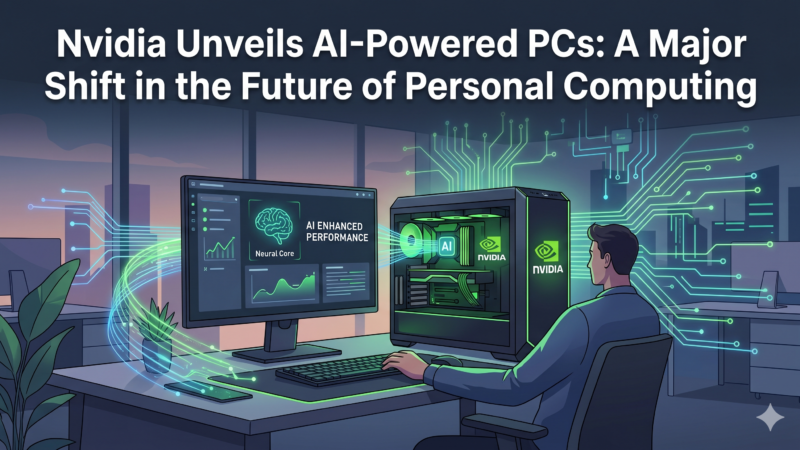
Nvidia Unveils AI-Powered PCs: A Major Shift in the Future of Personal Computing
The artificial intelligence era is getting more exciting. Nvidia, one of the worlds leading intelligence chipmakers has announced a new generation of personal computers designed specifically for artificial intelligence powered applications. This announcement was made during Computex 2026 in Taipei. It shows a change in how computers may work in the coming years.
For a time personal computers have relied on cloud servers to do advanced artificial intelligence tasks. This includes generating images analyzing data or talking to chatbots. Most artificial intelligence processing happened in data centers. Nvidia wants to bring a lot of that capability to users devices.
The new RTX Spark chip is at the center of this change. Nvidia says it is a processor built for the next generation of artificial intelligence driven computing. Unlike PC chips RTX Spark is designed to run advanced artificial intelligence models locally. This reduces the need for cloud infrastructure. Makes things faster more private and more efficient.
What makes these artificial intelligence PCs different from computers? The biggest difference is that they can support what experts call ” intelligence agents.” These are software systems that can do complex tasks with minimal human help.
Artificial intelligence agents can organize schedules summarize meetings do research create content manage workflows and even talk to software tools automatically. Nvidia thinks personal computers will become assistants rather than just machines that follow instructions.
Nvidia has partnered with Microsoft and other leading hardware manufacturers to bring these intelligence focused devices to market. Big brands like Dell, HP, Lenovo, Asus and MSI will launch systems powered by Nvidias technology.
The rise of artificial intelligence processing is a big deal. One of the challenges facing artificial intelligence today is that it relies too much on cloud computing. When users interact with artificial intelligence models a lot of data is sent to remote servers for processing.
Nvidias new approach reduces this dependency by letting many artificial intelligence functions run directly on devices. This can result in responses, better privacy protection and lower costs for businesses and consumers.
This change could be similar to the shift from desktop computers to smartphones. Like smartphones changed how people communicate and work artificial intelligence native PCs could fundamentally change how users interact with technology.
There is growing competition in the intelligence hardware market. Nvidias announcement challenges established players like Apple, Intel, AMD and Qualcomm in the growing artificial intelligence PC segment.
As demand for intelligence keeps growing manufacturers are racing to develop hardware that can handle complex workloads. Nvidias latest move shows that the battle for intelligence leadership is not just about data centers and cloud platforms. Personal computers are becoming a part of the competition.
This development has already affected investor sentiment. Nvidia shares are getting attention after the announcement while some rival chipmakers are facing market pressure.
So what does this mean for consumers? Artificial intelligence PCs could introduce a personalized and efficient computing experience. Tasks that currently require applications and manual effort may eventually be automated through intelligent assistants operating directly on the device.
Students could get real-time research help. Professionals might automate office tasks. Creators could make designs, videos and written content faster than before. Businesses may benefit from improved productivity while keeping control over data.
However the rise of intelligence powered computing also raises questions about privacy, security and the future role of human workers. As artificial intelligence systems become more capable, governments, businesses and technology leaders will likely keep debating how these tools should be used responsibly.
Looking ahead Nvidias latest announcement shows how quickly artificial intelligence is changing the technology landscape. The company believes artificial intelligence powered personal computers will become a part of everyday life moving advanced artificial intelligence capabilities from massive data centers directly into the hands of users.
Whether artificial intelligence PCs become the big computing revolution remains to be seen. But one thing is clear: the future of computing is all about artificial intelligence and Nvidia is positioning itself at the forefront of that change. Artificial intelligence is going to play a role in shaping the technology landscape and Nvidia is leading the way, with its new artificial intelligence PCs.

No Comments