
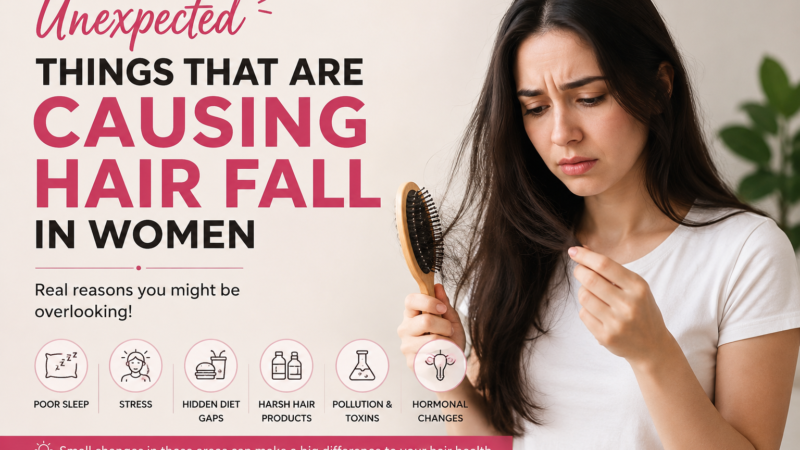
Unexpected Things That Are Causing Hair Fall in Women
Hair fall has become one of the most common beauty and health concerns among women today. While many people blame shampoos, hard water, or genetics, the real reasons behind excessive hair fall are often much more surprising. From stress and poor sleep to hidden nutritional deficiencies and daily habits, several unnoticed factors may be silently damaging your hair health.
If you have been noticing more hair on your pillow, comb, or bathroom floor lately, this article will help you understand the unexpected causes of hair fall in women and what you can do to control it naturally.
1. Poor Sleep Is Damaging Your Hair More Than You Think
Many women focus on skincare and hair products but ignore sleep. Lack of proper sleep affects hormone balance, blood circulation, and stress levels — all of which directly impact hair growth.
When your body does not get enough rest, it produces more cortisol, commonly known as the stress hormone. High cortisol levels can weaken hair follicles and trigger excessive shedding.
Signs Your Hair Fall May Be Linked to Sleep:
- Constant tiredness
- Hair thinning near the scalp
- Increased hair fall during stressful weeks
- Dull and lifeless hair texture
Experts recommend at least 7–8 hours of quality sleep for healthy hair growth.
2. Tight Hairstyles Can Slowly Damage Hair Roots
Many women regularly tie tight ponytails, buns, or braids without realizing the long-term damage they cause. Constant pulling creates tension on the scalp and weakens hair roots over time.
This condition is called traction alopecia, and it is becoming increasingly common among women who frequently wear tight hairstyles.
Hairstyles That Can Trigger Hair Fall:
- Tight ponytails
- Sleek buns
- Tight braids
- Hair extensions
Switching to loose hairstyles and avoiding excessive tension can significantly reduce hair breakage.
3. Hidden Nutritional Deficiencies
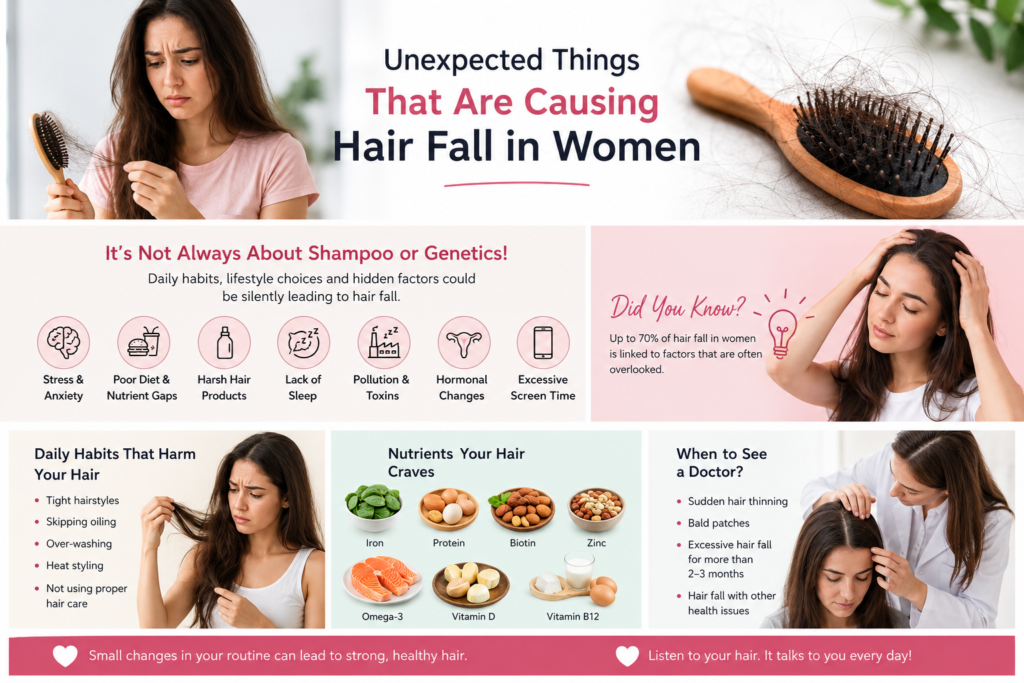
Your hair health is strongly connected to your diet. Even if you eat regularly, your body may still lack essential nutrients required for strong hair growth.
Deficiencies in iron, protein, zinc, Vitamin D, and biotin are among the leading causes of hair fall in women.
Common Symptoms:
- Weak hair strands
- Hair thinning
- Dry scalp
- Slow hair growth
Hair-Friendly Foods:
- Eggs
- Nuts and seeds
- Spinach
- Fish
- Lentils
- Yogurt
A balanced diet often improves hair quality more effectively than expensive beauty products.
4. Stress and Anxiety Are Major Hair Fall Triggers
Mental stress affects the body in several ways, and hair fall is one of the most visible signs. Emotional stress can push hair follicles into a resting phase, causing sudden hair shedding.
Many women notice increased hair fall during:
- Work pressure
- Exams
- Relationship stress
- Anxiety
- Emotional trauma
Managing stress through meditation, exercise, and proper rest can help restore healthier hair growth.
5. Overusing Heat Styling Tools
Frequent use of straighteners, curling irons, and blow dryers weakens the hair shaft and causes dryness, split ends, and breakage.
High heat strips away natural moisture from the hair, making it brittle over time.
Warning Signs:
- Rough hair texture
- Split ends
- Excessive breakage
- Hair losing shine
Using heat protectant sprays and limiting heat styling can help reduce damage.
6. Hormonal Changes Are Often Overlooked
Hormonal imbalance is one of the biggest reasons behind hair fall in women, especially during:
- PCOS
- Pregnancy
- Menopause
- Thyroid disorders
Changes in hormones can disrupt the normal hair growth cycle and lead to sudden thinning.
If hair fall is accompanied by irregular periods, acne, or sudden weight changes, consulting a doctor is important.
7. Pollution and Hard Water Can Harm Your Scalp
Environmental pollution and hard water are becoming growing causes of scalp problems in urban areas. Dirt particles, chemicals, and mineral-heavy water can clog hair follicles and weaken roots.
Common Effects:
- Itchy scalp
- Hair dryness
- Increased hair fall
- Frizziness
Using filtered water and cleansing the scalp properly can help protect hair health.
8. Excessive Dieting and Rapid Weight Loss
Crash diets may help reduce weight quickly, but they can shock the body and affect hair growth. When the body lacks calories and nutrients, it prioritizes essential organs over hair growth.
This often leads to temporary but noticeable hair fall.
Balanced nutrition is essential if you want both healthy hair and healthy weight management.
How to Reduce Hair Fall Naturally
Here are some simple habits that can help improve hair health:
- Sleep for at least 7 hours daily
- Eat protein-rich foods
- Avoid tight hairstyles
- Reduce stress levels
- Massage your scalp regularly
- Stay hydrated
- Limit heat styling tools
- Use mild shampoos
Small lifestyle changes can make a huge difference in hair growth and overall scalp health.
When Should You See a Doctor?
Occasional hair fall is normal, but you should consult a dermatologist if you notice:
- Sudden excessive hair shedding
- Bald patches
- Severe scalp itching
- Hair thinning for several months
- Hair fall along with hormonal symptoms
Early diagnosis can prevent long-term hair damage.
Final Thoughts
Hair fall in women is not always caused by poor hair products or genetics. Sometimes, the real reasons are hidden in daily habits, stress levels, sleep patterns, nutrition, and lifestyle choices.
Understanding these unexpected causes can help you take better care of your hair naturally. Instead of only changing shampoos, focus on improving your overall health and routine. Healthy hair often starts from within.
FAQ
What deficiency causes hair fall in women?
Iron deficiency, Vitamin D deficiency, low protein intake, and zinc deficiency are among the most common causes.
Can stress really cause hair fall?
Yes. High stress levels can disrupt the hair growth cycle and lead to excessive shedding.
Does sleeping late increase hair fall?
Poor sleep quality can increase stress hormones and negatively affect hair health.
Which hairstyle causes the most hair fall?
Tight ponytails, buns, and braids can weaken hair roots and cause traction alopecia.
Is hair fall from stress reversible?
In many cases, yes. Once stress is managed and lifestyle improves, hair growth may gradually return to normal.

No Comments